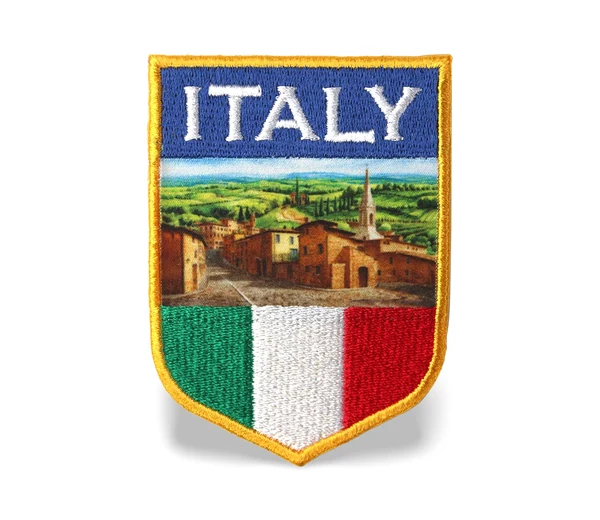
Size is one of the first decisions you will make, and it affects everything else: how much detail the design can carry, which materials work best and how the finished piece looks on the garment. The easiest way to choose is to start with where the patch will go.
Start with the placement
- Small patches (around 1″ to 2″): small accents, caps, bags and subtle branding.
- Medium patches (about 2.5″ to 3.5″): one of the most popular ranges, with room for logos, text and colour detail.
- Sleeve patches (up to about 4″): compact, easy to read from the side on shirts, polos and uniforms.
- Pocket patches (up to about 4.5″): left-chest and pocket-area branding.
- Large front patches (roughly 8″ to 12″): hoodie fronts and statement artwork.
- Back patches (roughly 12″ to 14″): jacket backs, biker vests and club apparel.
Think about detail and lettering
The smaller the patch, the simpler the artwork needs to be. As a rough guide, lettering needs to be around 5 mm (0.2″) tall to stay readable in thread, so a long company name on a tiny patch will not work. If your design is detailed, either increase the size or simplify the artwork. Woven patches can hold finer text than other thread styles.
Consider who will see it, and from how far
A patch worn on a cap is seen up close. A back patch on a jacket is seen from across a room. Match the size to the viewing distance and the design will always look intentional.